Polygon’s Culdcept Begins impressions this week landed on the same weird pitch every Culdcept player has already tried to explain to a friend: it is Monopoly with a Magic: The Gathering deck. Rolling a die around a board, claiming spaces with monsters, sabotaging opponents with instants. There has never been another game exactly like it. That is a problem when you finish Culdcept Begins and Switch 2 owes you a follow-up in six years’ time. The seven best Culdcept alternatives on desktop below split the components apart, deck construction, board tension, RNG management, and give you a home for each.
We picked games shipping on Steam in 2026 that either share Culdcept’s board layer, its deckbuild logic, or its unusual pace, so a fan can find at least one that fits the void.
Quick comparison
| Game | Best for | Platforms | Free plan | Starting price | Notes |
|---|---|---|---|---|---|
| Slay the Spire | Deckbuilder standard | Win, macOS, Linux | No | Low one-time | The reference |
| Monster Train | Multi-lane deckbuilder | Win, macOS, Linux | No | Low one-time | Tension per turn |
| Dominion Online | Pure deckbuild vs humans | Web + downloads | Yes | Free / Sub | Deckbuild grandfather |
| Wildfrost | Timeline deckbuilder | Win, macOS, Linux | No | Mid one-time | Board-adjacent |
| Roguebook | Board deckbuilder | Win, macOS, Linux | No | Mid one-time | Movement on a hex |
| Marvel Snap | Fast 3-lane CCG | Win via Steam | Yes | Free w/ IAP | Culdcept tempo |
| Meteorfall: Krumit’s Tale | Puzzle deckbuilder | Win, macOS, Linux | No | Low one-time | Board grid feel |
Why people leave Culdcept
Platform lockouts
Culdcept’s history is a scattered list of Sega, Nintendo, and PlayStation exclusives with no PC port. That is the whole reason this article exists. If you cannot buy the next entry on your box, you swap the concept.
Matchmaking runs dry
Culdcept was a slow burn even on release week. On any older entry, human opponents are not always around, and the AI runs out of new tricks fast.
Deck imbalance
Later Culdcept games shipped with a handful of dominant cards that meta players lean on. Fresh players hit a wall against tuned decks, and the imbalance grinds people out.
The alternatives
Slay the Spire, best for the deckbuilder standard
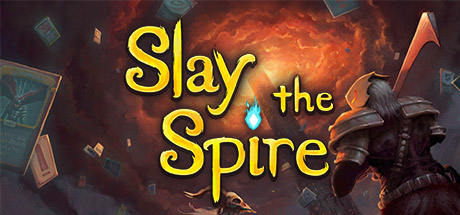
Slay the Spire is the reference deckbuilder every other roguelike deckbuilder since 2018 gets compared to. Three character archetypes, hundreds of cards, relics that rewrite the ruleset, and a difficulty escalator called Ascension that keeps the top end honest for years. It is not board-driven, but the deck construction feels closer to Culdcept than almost anything else.
Where it falls short: no board, no other players. Culdcept’s sabotage tension is not here.
Pricing:
- Paid: low one-time on Steam. Frequent deep discounts.
- vs Culdcept: cheaper, deeper deckbuilding, no board.
Migrating from Culdcept: bring the deck-building instincts. Leave the dice.
Download: Steam
Bottom line: pick Slay the Spire if the deck construction was the main Culdcept hook.
Monster Train, best for multi-lane deckbuilder
Monster Train stacks three vertical lanes on top of each other and asks you to defend all of them at once. Every turn is a small triage puzzle: which lane holds, which lane you sacrifice, which lane you tempo through. That per-turn tension is the closest a non-board deckbuilder gets to Culdcept’s “which of my four map corners do I reinforce” energy.
Where it falls short: no PvP. Runs are 30 to 60 minutes each.
Pricing:
- Paid: low one-time on Steam, DLC available.
- vs Culdcept: solo focus, but the same “which threat now” pressure.
Migrating from Culdcept: card evaluation habits transfer directly.
Download: Steam
Bottom line: pick Monster Train if the branching decisions per turn were what kept you at the Culdcept table.
Dominion Online, best for pure deckbuild vs humans
Dominion Online is the official adaptation of the tabletop deckbuilder that started the whole subgenre. It is turn-based, multiplayer, and endlessly configurable through expansion sets. If Culdcept’s real appeal was watching a deck engine come together against another human, Dominion is where that pleasure lives on desktop.
Where it falls short: no map layer. The visual style is spartan.
Pricing:
- Free: base game and rotating expansions.
- Paid: subscription unlocks the full expansion set.
Migrating from Culdcept: it is a card-only game. The board simulation goes elsewhere.
Download: Dominion Online
Bottom line: pick Dominion Online if what you missed was the human on the other side of the deck.
Wildfrost, best for timeline deckbuilder
Wildfrost puts units on a small board with counter timers and asks you to sequence their attacks around a shared timeline. It shares the Culdcept feeling of “these two pieces have to trigger in the right order or I lose the round”. Aesthetically it is warmer than Culdcept, but the tension shape is close.
Where it falls short: runs are short and the metagame is smaller than the top-tier deckbuilders on this list.
Pricing:
- Paid: mid one-time on Steam.
- vs Culdcept: no map, but the piece-order tension is real.
Migrating from Culdcept: timing decisions transfer well.
Download: Steam
Bottom line: pick Wildfrost if the small-tactical-board decisions were what you kept coming back for.
Roguebook, best for board deckbuilder
Roguebook is a deckbuilder that runs on top of a hex-tile board. Every run is a partial reveal of a map, a chosen route, and a two-hero party managing shared decks. It is the closest deckbuilder on Steam to Culdcept’s “the terrain matters” idea.
Where it falls short: solo only. The deckbuilder loop is deeper than the board layer.
Pricing:
- Paid: mid one-time on Steam.
- vs Culdcept: the shape of the board is different, but for once there is one.
Migrating from Culdcept: route-planning instincts transfer.
Download: Steam
Bottom line: pick Roguebook if you want a deckbuilder with an actual map, not just an encounter graph.
Marvel Snap, best for fast 3-lane CCG
Marvel Snap is the free-to-play card game that runs on three lanes, six turns, and quick sabotage plays that read almost exactly like Culdcept’s late-game power spikes. Matches take three minutes. The board pressure is real.
Where it falls short: gacha-shaped economy and daily quests. You are on someone else’s calendar.
Pricing:
- Free: full base game with rotating card pool.
- Paid: season pass and card acquisition boosters.
Migrating from Culdcept: the three-lane tempo is very close.
Download: Steam
Bottom line: pick Marvel Snap if the tempo was the appeal and you can live with a live-service model.
Meteorfall: Krumit’s Tale, best for puzzle deckbuilder
Meteorfall: Krumit’s Tale is a grid-based single-player deckbuilder where every encounter is a small board of face-down tiles you have to clear in the right order using the cards in hand. It is the puzzle-shaped cousin of Culdcept’s tactical exchanges.
Where it falls short: short runs, and the pool of encounters is limited compared to Slay the Spire.
Pricing:
- Paid: low one-time on Steam.
Migrating from Culdcept: the “read the board, plan the order” muscle transfers well.
Download: Steam
Bottom line: pick Meteorfall if the Culdcept exchanges felt like puzzles and you want an app-length puzzle in every sitting.
How to choose
Pick Slay the Spire if the deckbuilding was the main hook.
Pick Monster Train if the per-turn decisions were the main hook.
Pick Dominion Online if you miss the human across the table.
Pick Wildfrost or Roguebook if you want a small board back on screen.
Pick Marvel Snap if you want three-minute matches and can accept live-service.
Pick Meteorfall: Krumit’s Tale if you like each turn to feel like a small puzzle.
Stay with Culdcept if you own the newer entry and still have local friends who will pick up the pad.
FAQ
Is there a PC port of Culdcept?
Not a modern one. Older entries had emulator-friendly Japanese releases; the modern series is Nintendo and Sony console only.
What is the closest deckbuilder to Culdcept on Steam?
Roguebook, thanks to the board layer, followed by Wildfrost for the small-board tactical exchanges.
Do any of these games have online play?
Dominion Online and Marvel Snap are online-first. The rest are single-player.
Are any of these free?
Marvel Snap and Dominion Online both offer real free play. Marvel Snap monetizes card acquisition; Dominion Online monetizes expansions.
Do these run on Steam Deck?
Slay the Spire, Monster Train, Wildfrost, Roguebook, and Meteorfall all run comfortably. Marvel Snap runs but is easier on a controller than the Deck’s default touch.