Avatar: Seven Havens is Nickelodeon’s next serialised return to the world of the Airbender, and Polygon’s episode-title reveal has fans dissecting every string of the arc that follows Korra by a generation. The show ships in staggered drops, so the wait between episodes is real, and there is no billion-dollar Airbender open-world to sink into while it airs. That leaves two useful buckets for fans on PC: the one official Steam release set inside the show’s world, and a short list of martial-arts action games that recreate what bending combat actually feels like when you play it. This roundup ranks the best Avatar universe games on desktop, plus the closest bending-adjacent stand-ins that hold up between Seven Havens drops.
What to look for in an Avatar-universe game on desktop
Combat systems that reward stance and reading. Bending in the show is not spammy. It swings between quick jabs and long, wound-up moves, so games with meaningful commitment on every input feel closer than a pure button-masher.
Elemental variety or discipline switching. Air, water, earth, fire and the Avatar State each move differently. Games that let you swap between multiple move-sets, or evolve one style over time, hit the same nerve.
Story fidelity when lore matters. Only one game on this list is set in the show’s world. The rest need a headcanon to fit, and this section flags which is which.
Difficulty range. Some picks scale mercilessly, others let you dial the challenge down. Between-episode gaming should not turn into a second full-time job.
Platform stability on Windows. All eight picks below are native Windows releases with active player counts on Steam, and most run comfortably on Steam Deck as well.
Quick comparison
| Game | Best for | Cost | Where to buy | Standout feature |
|---|---|---|---|---|
| Quest for Balance | Only actual ATLA release on Steam | ~$40 | Steam | Playable Aang, Katara, Sokka, Toph and Zuko |
| Absolver | Custom bending-style combat deck | ~$30 | Steam | Combat Deck of hundreds of moves |
| Sifu | Kung fu single-run mastery | ~$40 | Steam | Aging mechanic between fights |
| Ghost of Tsushima Director’s Cut | Cinematic stance switching | ~$60 | Steam | Four stances mirror four bendings |
| Sekiro: Shadows Die Twice | Airbender-style deflect timing | ~$60 | Steam | Posture and deflect system |
| Blade & Soul | Free wuxia MMO with elemental classes | Free | Steam | Six martial-arts classes |
| Naruto Storm 4 | Anime combat with element-swap combos | ~$50 | Steam | Awakenings and team ultimates |
| One Piece: World Seeker | Open world with elemental toolkit | ~$60 | Steam | Movement-heavy Devil Fruit combat |
The apps
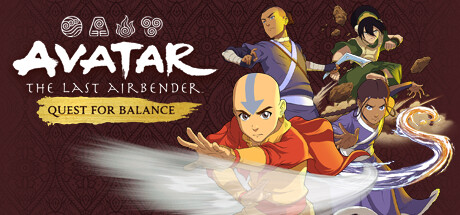
1. Avatar: The Last Airbender - Quest for Balance, best for playing inside the show’s world
Avatar: The Last Airbender - Quest for Balance is Bamtang Games’ 2023 licensed release and the only Steam entry actually set in the show’s world. You switch between Aang, Katara, Sokka, Toph and Zuko across a short campaign tied to Book Three: Fire. Puzzle rooms mix each character’s bending or weapon set, and Toph’s earth pillars still hit the way an eight-year-old wanted them to. Combat is entry-level and boss fights are short, but the fanservice does its job.
Where it falls short: the linear structure and rough camera keep this from being the sandbox Airbender campaign fans have wanted for two decades. There is no bending playground worth speaking of once the credits roll, and the story is a light retelling rather than new canon.
Pricing: one-time purchase, typically around $40 with regular sales down to about $10.
Platforms: Windows.
Download: Avatar: The Last Airbender - Quest for Balance on Steam
Bottom line: buy it on sale, finish it in an evening, treat it as an appetiser between Seven Havens episodes.
2. Absolver, best for building your own bending style
Absolver is the closest a game has come to the show’s “everyone has their own form” fantasy. Sloclap’s martial-arts sandbox (the studio later made Sifu) hands you a Combat Deck with hundreds of moves and asks you to plot them onto four stances, then lets you meet other Prospects online in an open, semi-lawless world. Bending is not literal, but Windfall’s cape-swirl reads like an Air Nomad translation and Kahlt’s tank stance stands in for earthbending resolve.
Where it falls short: peer-to-peer matchmaking has been quiet for years, so PvP encounters happen in bursts rather than as a steady queue, and the story is thin outside your own build.
Pricing: one-time purchase, typically around $30 with sales down to about $8.
Platforms: Windows.
Download: Absolver on Steam
Bottom line: if you have ever daydreamed about designing your own bending form, Absolver is the exercise, especially with a friend along for co-op.
3. Sifu, best for one-life mastery of a single style
Sifu is the direct descendant of Absolver, tightened into a single-player, roguelike-adjacent structure. You play a kung fu student who cycles through five hand-crafted levels, and each death ages your character. Older ages soak more punishment while dying to fewer hits, so the loop rewards clean reads over button-mashing. The 2023 arenas update and difficulty rebalance opened the door for players who bounced off the launch version.
Where it falls short: Sifu is unapologetic about wanting mastery. Even Student difficulty punishes early quits, and the aesthetic is Hong Kong action cinema rather than anywhere in the four nations, so it takes a bit of imagination to slot it into an Avatar mood.
Pricing: one-time purchase, typically around $40 with sales down to about $15.
Platforms: Windows.
Download: Sifu on Steam
Bottom line: buy when you want a martial-arts crucible that you will visibly improve at in the same weekends you would spend rewatching a Book.
4. Ghost of Tsushima Director’s Cut, best for stance switching that mirrors bending
Ghost of Tsushima Director’s Cut on PC maps four fighting stances to enemy archetypes, so switching mid-combo becomes muscle memory in the same way an Avatar shifts between elements. The Wind guiding your path on the overworld, the standoff duels, and Sucker Punch’s cinematic camera all put the game a step closer to the show than its samurai wrapping suggests. It is the biggest-production open world on this list.
Where it falls short: it is a samurai epic, not an Airbender fantasy. No air ability, no water manipulation, no fire arcs. The stances are the metaphor, not the substance, and the campaign is longer than most viewers will want between episodes.
Pricing: one-time purchase, typically around $60 with sales down to about $35.
Platforms: Windows.
Download: Ghost of Tsushima Director’s Cut on Steam
Bottom line: if you loved Aang’s stance discipline more than the elemental fireworks, this is the sixty-hour campaign to sink into while Seven Havens airs.
5. Sekiro: Shadows Die Twice, best for deflect combat that maps onto airbending
Sekiro: Shadows Die Twice gets a lot closer to Avatar than its trailers ever hinted. FromSoftware built the whole game around one input, and the deflect-and-posture system is what every parry-first title since has been measured against. Every enemy telegraphs, every deflect turns their commitment against them, and posture damage does what Katara’s water whips do to a Fire Nation soldier who over-extends. Prosthetic tools (Loaded Umbrella, Sabimaru, Flame Vent) add discipline layers with different open windows.
Where it falls short: no difficulty options. Sekiro is a wall, and the classic “easy once it clicks” community story arc still takes forty hours to reach for most players.
Pricing: one-time purchase, typically around $60 with sales down to about $20.
Platforms: Windows.
Download: Sekiro: Shadows Die Twice on Steam
Bottom line: if you rewatched the Blue Spirit sequence too many times, Sekiro is the honest-to-Aang test of that fantasy.
6. Blade & Soul, best free wuxia MMO with bending-flavoured classes
Blade & Soul is the oldest game on this list, and NCsoft’s free-to-play MMO still translates wuxia flourishes to a live-service format better than most of its successors. Force Master is basically a firebender, Warlock is a shadow-and-wind hybrid, and Destroyer wants nothing more than to be an earthbender with a giant axe. Combos chain on stance switches instead of hotkey rotations, which is the mechanic that made the game stand out on release.
Where it falls short: the player population has been in slow decline for years, and endgame progression leans on monetisation choices that longtime MMO players will smell from a distance. Newer character servers are the only comfortable place for a new arrival to start.
Pricing: free to play, with optional cosmetics and premium membership.
Platforms: Windows.
Download: Blade & Soul on Steam
Bottom line: grab it while it is free, run the story campaign for the class variety, and log off before the endgame starts asking for a wallet.
7. Naruto Shippuden: Ultimate Ninja Storm 4, best for anime combos with elemental awakenings
Naruto Shippuden: Ultimate Ninja Storm 4 treats jutsu the way Avatar treats bending: quick chakra-scaled projectiles, stance-shifting awakenings, and finisher cinematics that lean on the same theatrical timing as Iroh’s fire discipline. Storm 4 rolls the polished Storm 3 systems into a bigger roster, and the Road to Boruto content pushes the story past the show. It is the couch-friendly pick on this list.
Where it falls short: this is a story-mode retelling more than a full canon experience, and pure fighting-game players will find the tech shallow next to Tekken or Guilty Gear. Netcode has aged, so lobbies are best kept regional.
Pricing: one-time purchase, typically around $50 with sales down to about $10.
Platforms: Windows.
Download: Naruto Shippuden: Ultimate Ninja Storm 4 on Steam
Bottom line: the pick to put a controller in a friend’s hands during an episode break when neither of you wants to commit to a soulslike.
8. One Piece: World Seeker, best for an open-world elemental toolkit
One Piece: World Seeker is the Ganbarion-era Luffy open-world that leans into aerial movement, elemental toolkit swapping between Observation, Armament and Gum-Gum forms, and stealth arcs that treat combat as a choice. It is not the highest-scored One Piece game, but it is the closest thing on Steam to the fantasy of exploring a fantasy world with an elemental power set.
Where it falls short: mission design is uneven and side content leans on Ubisoft-style outposts. The story is filler-canon rather than a main arc, so lore purists will bounce.
Pricing: one-time purchase, typically around $60 with sales down to about $8.
Platforms: Windows.
Download: One Piece: World Seeker on Steam
Bottom line: the scratchy pick when you want an open world and a stretchy protagonist swinging around it, kept at a Saturday-afternoon expectation rather than peak Bandai Namco.
How to pick the right one
If you want the only actual ATLA game on Steam, pick Quest for Balance. It is the sole entry whose characters have canon names and a Book Three tie-in.
If you want to design your own bending style, pick Absolver. Nothing else lets you assemble stance decks with the same freedom.
If you want to master one style until muscle memory replaces thinking, pick Sifu. It is the toughest school on this list.
If you want a hundred-hour campaign with elemental stance-switching, pick Ghost of Tsushima Director’s Cut.
If deflect combat is the fantasy you want tested, pick Sekiro: Shadows Die Twice. Uncompromising and still the reference.
If you want to keep it free while sampling six martial-arts classes, pick Blade & Soul.
If you want a couch-friendly anime brawler for episode breaks, pick Naruto Shippuden: Ultimate Ninja Storm 4.
If you want an open-world sandbox with elemental toolkits, pick One Piece: World Seeker.
The order to buy them in if all eight went on sale at once: Quest for Balance, Sekiro, Ghost of Tsushima, Sifu, Absolver, Naruto Storm 4, One Piece: World Seeker, Blade & Soul.
FAQ
What is the only actual Avatar: The Last Airbender game on Steam?
Avatar: The Last Airbender - Quest for Balance (2023) is the only current Steam release set in the show’s world. It follows Aang, Katara, Sokka, Toph and Zuko through a short campaign tied to Book Three: Fire. Older tie-in games from the mid-2000s are console-only and mostly out of print.
Is there an official Avatar: Seven Havens video game yet?
No. As of September 2026 no Seven Havens tie-in game has been announced. The tabletop RPG Avatar Legends is the closest official Seven Havens-adjacent product, but there is no PC or console game confirmed yet.
Which game feels the most like actual bending?
Absolver is the mechanical answer because you assemble a Combat Deck across four stances, which is the closest a video game gets to designing your own bending form. If you want elemental variety across four disciplines, Ghost of Tsushima’s stance system captures the switching fantasy better than anything else on Steam.
Is Avatar: Frontiers of Pandora related to Avatar: The Last Airbender?
No. Avatar: Frontiers of Pandora is a Ubisoft game set in James Cameron’s Avatar universe with the Na’vi. It has nothing to do with Aang, Korra or the Last Airbender show. Skip it if you are looking for something in the Airbender world.
Can any of these games be played on Steam Deck?
Sekiro, Sifu, Absolver, Naruto Shippuden: Ultimate Ninja Storm 4 and One Piece: World Seeker all run well on the Deck. Ghost of Tsushima and Quest for Balance are also playable but check display and control settings before a long session. Blade & Soul is technically playable but the MMO UI is cramped on the small screen.
Which of these should we play first while waiting for Seven Havens?
Start with Quest for Balance for the fanservice, then Sekiro if you want the deepest combat systems, or Naruto Storm 4 if you want something you can put down after an episode-length session without losing your place.